EUR/USD is one of the most liquid and volatile currency pairs, making it a prime candidate for day trading. Because of its tight spreads and high trading volume, short-term traders often focus on this pair for consistent opportunities.
In this guide, you’ll learn how to implement an effective EUR/USD day trading strategy with actionable rules, ideal timeframes, and key indicators.
Why Day Trade EUR/USD?
- Tight spreads: Low cost per trade
- High volatility: Consistent intraday movement
- Global attention: Heavily influenced by economic news
- Multiple sessions: Active during both London and New York hours
These factors make EUR/USD suitable for trading short price movements multiple times a day.
Best Timeframes for EUR/USD Day Trading
Use the following timeframes to identify and execute trades:
- 15-minute chart: Good for quick scalping setups
- 1-hour chart: Offers clean structure for intraday swing trades
- 4-hour chart (for context): Helps identify short-term trend direction
Start analysis with the 1-hour or 4-hour chart, then drop to lower timeframes to time entries and exits.
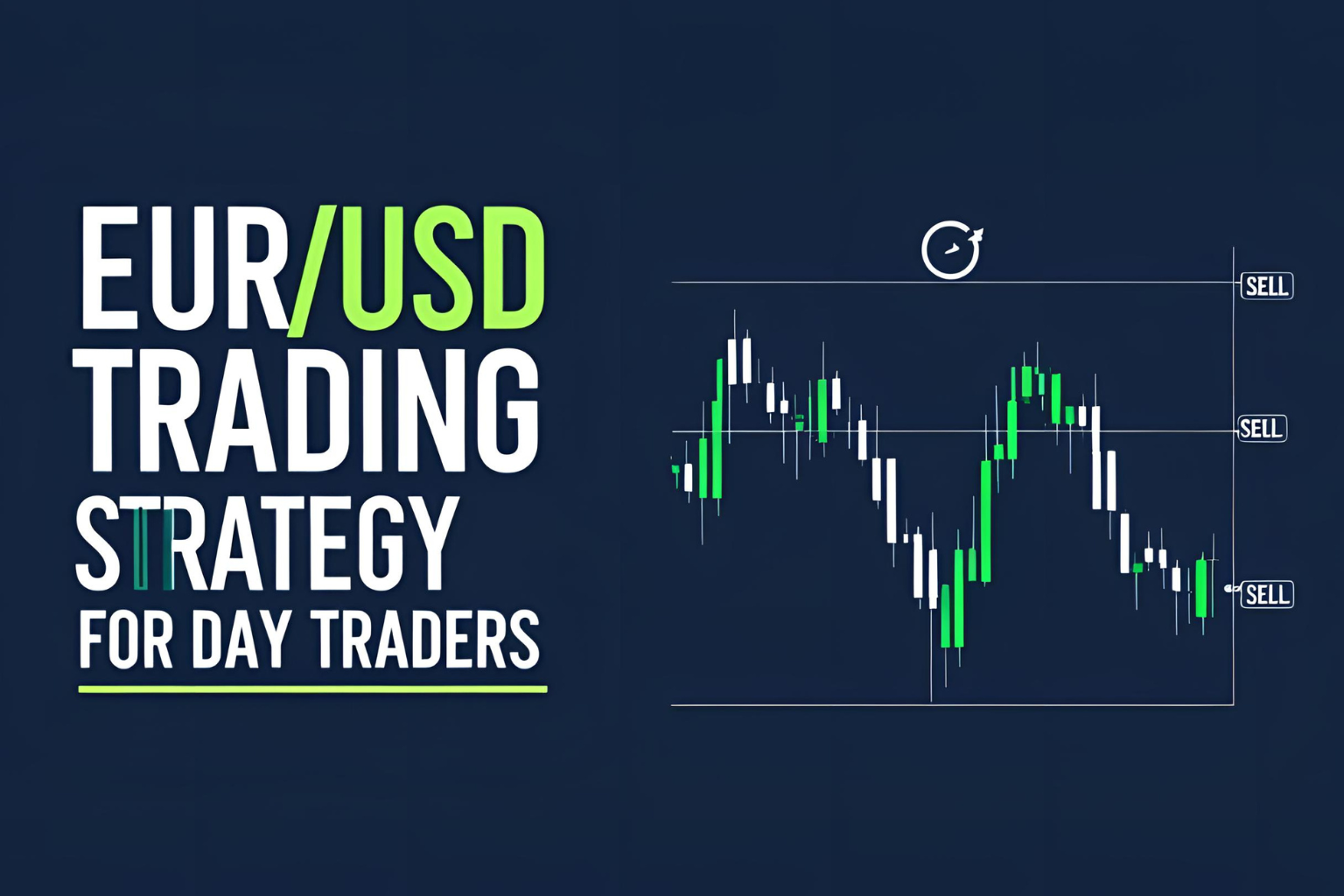
Simple EUR/USD Day Trading Strategy: 3-Step Setup
Step 1: Identify the Trend
- Use a 50-period Exponential Moving Average (EMA)
- Look for the price to stay above the EMA in an uptrend or below in a downtrend
Step 2: Wait for a Pullback
- Use the RSI (14) and watch for a pullback to the 40–50 zone in an uptrend or 50–60 in a downtrend
- Price should pull back to the EMA but not break it decisively
Step 3: Enter on Confirmation
- Enter after a bullish or bearish engulfing candle
- Set stop-loss just below the recent swing low (or high)
- Use a 1:1.5 or 1:2 risk-reward ratio for targets
Key Indicators to Use
- 50 EMA: Trend direction and dynamic support/resistance
- RSI (14): Pullback strength and momentum
- Volume or MACD: Optional confirmation of price movement
Always confirm that the market is trending and avoid ranging conditions unless using a breakout approach.
Risk Management Tips for Day Traders
- Risk no more than 1% of your capital per trade
- Stick to predefined setups, don’t chase price
- Limit your trades to 2–4 per day to avoid burnout
- Journal every trade for future review
Discipline is more important than the strategy itself.
Frequently Asked Questions (FAQs)
1. What is the best time to day trade EUR/USD?
The London–New York overlap (6:30 PM to 10:30 PM IST) offers the best volatility and trade setups.
2. Can beginners day trade EUR/USD?
Yes, but only with practice on demo accounts and strong risk management.
3. What’s a good daily profit target for EUR/USD day trading?
Aim for consistent execution rather than fixed profits. Focus on maintaining a positive risk-reward ratio.
4. Should I use leverage for day trading EUR/USD?
Leverage increases both risk and reward. Use it carefully and always apply stop-loss orders.
5. Do news events affect day trading setups?
Yes, news can cause price spikes. It’s best to avoid trading just before or after major economic releases.